
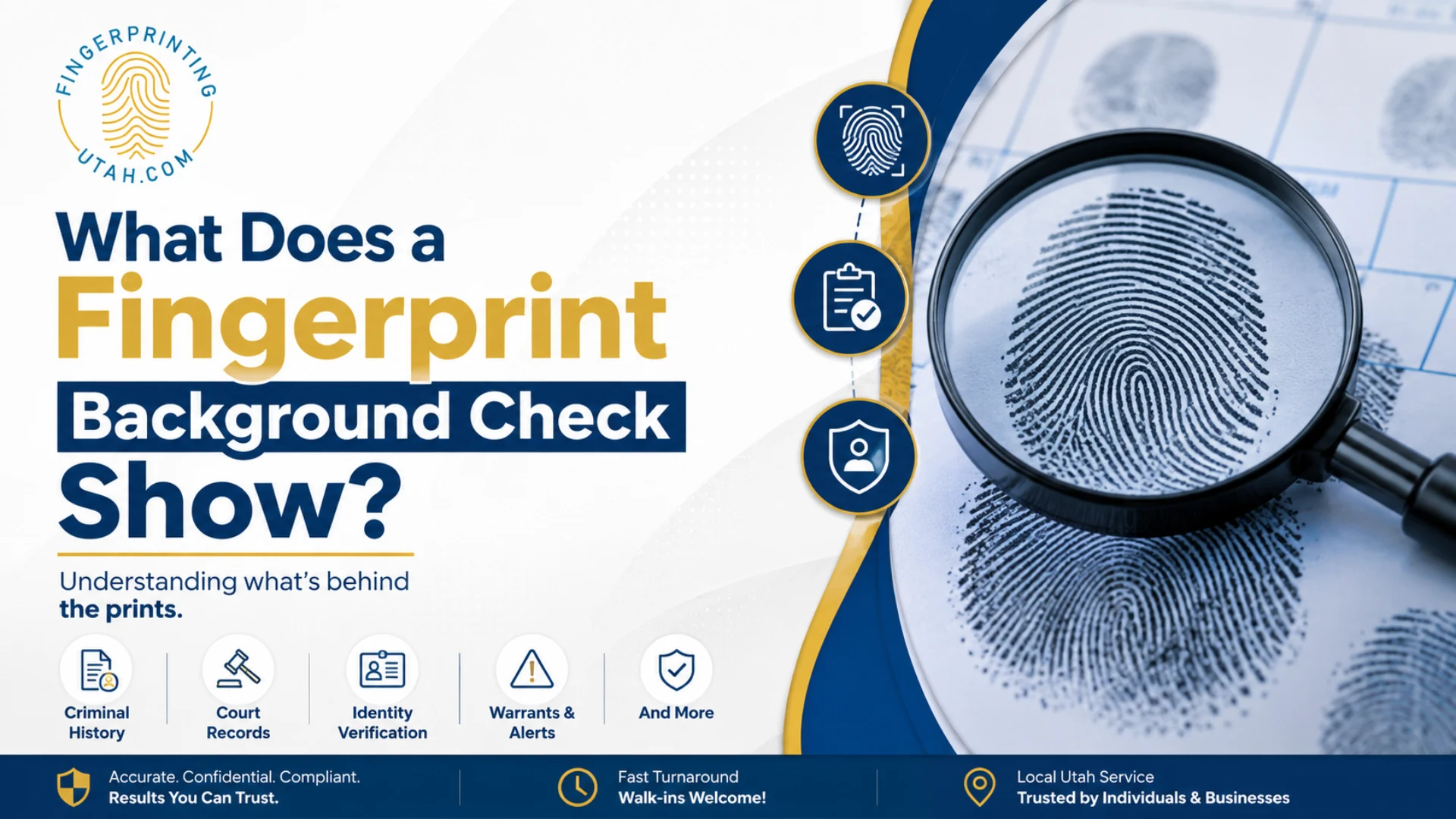
A fingerprint background check verifies your identity and searches official criminal history databases for records associated with your fingerprints. Depending on the agency requesting the check and the level of screening required, it may show arrests, criminal convictions, pending charges, warrants, incarceration records, and other reportable criminal history information. Unlike a standard name-based background check, fingerprint-based screening is much more accurate because fingerprints are unique and cannot be confused with someone who has a similar name or date of birth.
Fingerprint background checks are commonly required for employment, professional licensing, immigration, adoption, firearm-related applications, volunteer work, and other situations where a higher level of identity verification is necessary.
How Does a Fingerprint Background Check Work?
A fingerprint background check begins by capturing your fingerprints electronically or with ink. Those fingerprints are then submitted to the appropriate state or federal agency for comparison against criminal history databases.
Because fingerprints are permanent biometric identifiers, they provide a highly reliable method of confirming a person’s identity. This greatly reduces the chance of false matches that can sometimes occur with name-based background checks, especially when multiple individuals share similar names.
The results are then returned to the requesting agency, employer, licensing board, or organization, depending on the purpose of the background check.
What Information Can a Fingerprint Background Check Reveal?
The exact information included depends on who requests the background check and which databases are searched.
In many cases, fingerprint background checks may include criminal arrests, felony and misdemeanor convictions, pending criminal charges, incarceration records, court dispositions, warrants where legally reportable, and other criminal justice information maintained by state or federal agencies.
Some fingerprint-based screenings are limited to state records, while others include nationwide searches through the FBI’s criminal history databases. Certain licensing agencies may also review records related to professional misconduct or regulatory actions when authorized by law.
Not every background check returns the same level of information. The requesting organization determines which records are searched based on legal requirements and the purpose of the screening.
Does a Fingerprint Background Check Show Every Arrest?
Not necessarily.
Whether an arrest appears depends on the reporting agency, applicable state laws, and the type of background check being conducted. Some arrests that did not result in convictions may still appear in certain government or licensing background checks, while others may not be reportable under applicable laws.
Additionally, records that have been sealed, expunged, or otherwise removed under state law may not appear on many fingerprint background checks, although there can be exceptions depending on the requesting agency and legal authority involved.
If you have questions about your own criminal history record, you may be able to request a copy from the appropriate state or federal agency.
Fingerprint Checks vs. Name-Based Background Checks
Although both types of background checks are used to screen applicants, they differ significantly in accuracy and scope.
A name-based background check searches records using identifying information such as your name, date of birth, and Social Security number. While this method is fast and commonly used for routine employment screening, it may occasionally produce false matches or miss records if identifying information is inaccurate.
Fingerprint background checks use biometric identification instead. Since no two people have identical fingerprints, the results are generally considered more reliable and are often required for positions involving public trust, vulnerable populations, or government licensing.
When Is a Fingerprint Background Check Required?
Many organizations require fingerprint-based screening because it offers greater confidence in identity verification.
Employers in education, healthcare, financial services, childcare, law enforcement, government agencies, and security-sensitive industries frequently require fingerprint background checks before hiring new employees. Professional licensing boards also commonly require fingerprint submissions for nurses, teachers, real estate professionals, insurance agents, and many other licensed occupations.
Fingerprint background checks are also commonly used during adoption proceedings, immigration applications, concealed firearm permit applications where applicable, and volunteer positions involving children or vulnerable adults.
How Long Does a Fingerprint Background Check Take?
Processing times vary depending on the agency conducting the search.
Electronic fingerprint submissions are generally processed faster than traditional ink fingerprint cards. Some results may be available within a few business days, while others can take one to several weeks depending on workload, additional reviews, or the type of screening requested.
Government agencies, licensing boards, and employers typically provide estimated processing times during the application process.
Can You Fail a Fingerprint Background Check?
A fingerprint background check itself isn’t something you pass or fail.
Instead, the screening simply reports criminal history information found within the databases searched. The employer, licensing board, or requesting organization then reviews those results according to its own eligibility standards and applicable laws.
Having a criminal record does not automatically disqualify someone from every job or license. Many organizations consider factors such as the nature of the offense, how long ago it occurred, evidence of rehabilitation, and whether the offense is relevant to the position being considered.
How Can You Prepare for a Fingerprint Appointment?
Preparing for your appointment helps ensure your fingerprints are captured clearly and submitted without delays.
Bring the identification documents requested by the agency or employer, arrive on time, and make sure your hands are clean and free from heavy lotions or substances that could affect fingerprint quality. If your fingerprints are difficult to capture because of dry skin or worn ridges, the technician may provide additional guidance to obtain high-quality prints.
Choosing an experienced fingerprinting provider also helps reduce the chance of rejected fingerprint submissions that require another appointment.
Obtaining a Utah Fingerprint Background Check
If you need a Utah state background check for employment, licensing, adoption, volunteer work, or another official purpose, it’s important to work with a provider familiar with Utah’s fingerprint submission requirements.
Professional fingerprint technicians use approved equipment to capture high-quality fingerprints and help ensure your submission is completed accurately, reducing unnecessary delays during processing.
Also Read: Does Utah Allow Online Notary?
Final Thoughts
Fingerprint background checks provide one of the most reliable ways to verify identity and review official criminal history records. Because they rely on biometric identification instead of names alone, they offer greater accuracy for employers, licensing agencies, government organizations, and many other entities that require thorough screening.
If you need fingerprinting services in Utah, Fingerprinting Utah provides professional electronic fingerprinting for employment, licensing, background checks, immigration, and many other official purposes. Their experienced team helps ensure your fingerprints are captured accurately so your application process can move forward as smoothly as possible.